How to spend $60m on #Innovation and #Entrepreneurship for #Startups

In the recent Victorian State Budget, the government allocated $60m over 4 years to supporting startups, via innovation and entrepreneurship. While not an insignificant sum, it’s still not a huge amount in the overall scheme of things. Having made the announcement, the government hurriedly undertook some rapid community and stakeholder consultation, to figure out how to spend the money. I was fortunate enough to be invited to one of the consultation exercises, a half-day lightning conference organised by Dandalo Partners, facilitated by Collabforge, and hosted by Teamsquare co-working space.
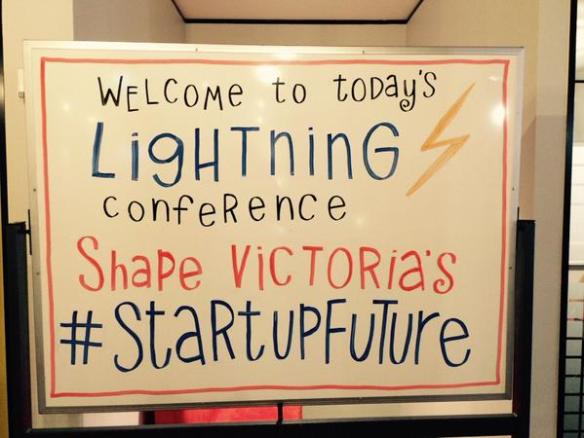
LightningConference

The theme of the Lightning Conference was #StartUpFuture

At the outset, there was an assumption that whatever recommendations came out of the consultation process, a new quango would be formed to oversee the implementation of the program and distribution of the funding. I don’t think I was alone when I expressed my concern that this was rather like putting the cart before the horse – the implication being, “Why seek our opinion, views and recommendations if you’ve already decided the solution?”

To their credit, the organisers took this on board – for example, rather than creating yet another entity, maybe the funding could be facilitated by an existing body such as Startup Victoria – but it felt that the consultation exercise was at risk of “going through the motions”.

Across the various topics that were discussed in the self-forming and self-directed breakout sessions, there were probably 5 key themes:

  1. Community
  2. Infrastructure
  3. Funding
  4. Sustainability and 
  5. “Picking Winners”. 

Here are the main points from each of those themes:

1. Community

There was general agreement that the local startup and entrepreneurial community is well-established, reasonably well-connected (I myself knew about 10% of the participants from various networks) and growing fast.

However, there was also a common view that more could be done to bring entrepreneurs and like-minded people together. For example, how do people know what ideas or projects everyone is working on, how can people find help or make offers of help in terms of matching skills, experience, knowledge, resources? How do we connect suppliers and investors to startups?

Sure, there are numerous meetups and regular startup events, but is there a better way to leverage this potential?  And there are various matching services linking entrepreneurs to mentors, but they are rather ad hoc, and in the case of connecting startups and investors, there are probably more challenges than there are opportunities (see Funding, below).

In short, how can the community come together in a more collaborative way?

2. Infrastructure

It’s quite easy to see that Victoria (mainly Melbourne) has a vibrant startup ecosystem, simply based on the number and frequency of meetup events, founder workshops and hackathons. But there still appear to be numerous obstacles to getting started – from establishment costs and bureaucratic red tape, to tax impediments and access to funding.

Some of these challenges are being addressed at Federal level (e.g., streamlining the company registration process, tax cuts for SMEs, and changes to both equity crowdfunding and employee share schemes). But that’s part of the challenge in itself – at the individual State level, there is relatively little that can be done on fiscal policy (apart from payroll tax and land tax), and all reforms relating to securities financing need Federal legislation and the involvement of market regulators.

The State government has more autonomy around local industry policy settings and planning, as well as making funding available via grants. This means, though, that government is forced to prioritize one sector over another (see “Picking Winners”, below), and a system of grants often results in a mini-industry that is created around grant applications, awards and distribution.

At a practical level, some participants took the view that more could be done to facilitate early stage startups and product prototyping – such as a continuous education and open-enrollment program for entrepreneurs, and co-working spaces for small-scale manufacturing, materials-testing, and engineering. (I am aware of at least a couple of local projects in this space – a biotech co-working lab and an “Internet of Things” open access workshop).

If the State government is looking to plug a gap, investing in R&D facilities might be one option.

3. Funding

This remains the biggie – and a topic previously covered both in this blog, and via numerous commentators and advisers. Even though there are many local pitch competitions, incubators and accelerator programs (plus Shark Tank and That Startup Show make for interesting/amusing viewing…) the elephant in the room is that there are too many startups chasing too few investors.

Competition for resources is positive, as long as it’s an efficient, transparent and accessible market, where the laws of supply and demand are equitable and the rules of engagement are clearly understood.

One industry veteran noted that the local investor community can normally provide small-scale startup funding up to $5m (via “family, friends and fools” and angel backers), and even larger, early-stage equity funding over $50m (via Venture Capital, Private Equity and Family Offices). But in the $5m-$50m range there are far fewer options.

Leaving aside the pros and cons of traditional secured and unsecured bank lending and emerging P2P lending platforms, there is a funding gap that could be filled via Australia’s superannuation scheme:

  • First, we need to find ways to get large retail and industry super funds along with other institutional investors to invest directly in local startups. At present, thanks to the Silicon Valley effect, these instos are more comfortable handing their money to US-based fund managers who then charge a premium to invest the assets in local startups. (I call this a very expensive boomerang….)
  • Second, in the absence of suitable investments for retail investors who may want to allocate part of their portfolio to startup opportunities, part of their superannuation assets could be used to invest in early-stage startups via a form of savings products or fixed income bonds. The retail bond market (such as it is) is heavily skewed towards sovereign debt (treasury bonds) and bonds issued by financial institutions (often in the form of hybrid securities, which are essentially a form of deferred equity). There have been attempts (and even regulatory reforms) to encourage the development of a deeper retail bond market in Australia, but these efforts appear to have stalled.

An enlightened approach to asset allocation could direct even a very small part of the $1.8tn superannation savings into startups that could have significant outcomes. If SMEs are seen as the backbone of future economic activity and jobs (as well as innovation and entrepreneurship), helping to accelerate startup growth will deliver multiple long-term dividends.

4. Sustainability

This wasn’t a huge topic of discussion, but it deserves an honourable mention because it surfaced in several ways:

  • Economic (e.g., making better use of available resources, not funding startups that go nowhere etc.)
  • Social impact (e.g., the growth of social enterprises)
  • Environmental (e.g., the conscious capitalism movement and the importance of “for purpose” enterprises such as B-Corps that want to minimize their environmental footprint)
  • Government (e.g., how to foster startups that want to help deliver better public services, and how to change public sector procurement policies that give startups more of a look-in)

There is also a need to reflect the changing demographics of the workplace, so that sustainable employment opportunities (in whatever form they exist) are made available to both mature-age workers and new school leavers.

So perhaps part of the $60m could be put towards (re)training initiatives.

5. “Picking Winners”

First up, let me say I always get nervous when we put our elected representatives in charge of deciding the fate of specific industries, especially when it’s taxpayers’ money at risk. Call me a cynic, but I’m not sure that picking winners is the government’s forte. I understand the need to support certain sectors that contribute to GDP growth, create employment opportunities, generate taxable revenue, instil industry innovation and develop cutting-edge technology – but the example of the domestic automotive industry is one where political ideology probably got the better of sound economics, as public subsidies eventually came to look like throwing good money after bad.

If nothing else, picking or backing winners is fraught with problems of favouritism, lobbying, murky back room deals and “jobs for the boys”. Better to create the foundations upon which broader innovation and entrepreneurship can thrive, and let the market decide. That way, the government can still claim the credit, and frame the conversation around its role as an enabler.

On the day, the discussion was more about the long lead time before anyone would know whether the program had been successful (assuming we can agree on what success should look like). In reality, re-tooling innovation and entrepreneurship is a 10-year initiative (which is difficult to manage in the face of short-term policy settings linked to 3 and 4-year election cycles).

  • Should we teach entrepreneurship and innovation in schools (alongside coding and STEM subjects)?
  • Should government use local plebiscites to determine where/when/how the funding should be allocated?
  • Should we use the money to directly fund startup founders (rather like the UK’s enterprise allowance scheme in the 1980s)?

There was also a suggestion that the money could be used to promote local startup success stories, in order to foster an understanding of truly viable startups, to identify and fast-track high-potential entrepreneurs, as well as define what is takes (time, money, resources, networking and connections) to build scalable and sustainable startup businesses (i.e., companies generating $250m+ in revenue, not lifestyle ventures or small family owned concerns).

If we do need to pick winners, perhaps we can easily agree which ones they are based on current trends, future needs and demographic demands:

  • Health, biotech and medtech
  • Fintech and big data analytics
  • Education and lifelong learning
  • Renewables and green technologies
  • High-tech engineering and manufacturing

In which case, we should simply help the State government prepare an investor profile, set an optimum portfolio performance target (based on financial returns, innovation scores and a mix of social and environmental outcomes) and give the $60m to a skilled fund manager.

FOOTNOTE:

For further ideas, please see 10 Random Ideas…

POSTSCRIPT:

A couple of further contributions to the innovation debate from AVCAL around tax reform, and from OneVentures around superannuation allocation.


Next week: Medtech’s Got Talent

How to work with #Boards

At some point in your career, you will find yourself working with Boards. In particular, if you are appointed to a CEO role, or if you are part of an executive team, there is an expectation or requirement that you will attend regular Board meetings, and you will need to develop the necessary skills and expertise to navigate the process.

The_SPECTRE_heirarchy

Board meetings don’t have to be as daunting as this… (The SPECTRE hierarchy as portrayed in “Thunderball”)

The following comments were crowdsourced from a group of senior executives and non-executive directors who were asked to share their views on how someone in a senior management role should prepare prior to presenting at a Board meeting – in particular, where there may have been a change of Chairman, a new CEO or new appointments to the Board. It’s designed to be part “how to” guide, part coaching tool, and part insight drawn from actual experience – and in some cases, the comments answer the question “what I wish I’d known before I stepped into the Board meeting…”.

The comments have been divided into three sections:

  1. Governance
  2. Relationship between the Chairman and CEO
  3. Presenting to Boards

1. Governance

How are Board meetings run?

1) From experience, working with a Board really depends on how the Chairman likes to run things. The Chairman is usually assisted by the Company Secretary (or a Secretariat), or other legal officer of the organisation, who may also form part of the senior management team.

2) The Secretary is responsible for making sure everything runs smoothly for the Board members. In addition to supporting the Chairman, the Secretary schedules the Board meeting, circulates the relevant notices and papers in advance, prepares the meeting agenda, and records the minutes. (In some organisations the CEO will be as involved in preparing for a Board meeting as the Secretary.) The Secretary will also assist the Chairman in ensuring the meeting is conducted in an orderly fashion, and in accordance with the company constitution and any other rules governing meetings.

3) If you have been asked to attend a Board meeting to report on an important project or to present a new initiative, it should be noted in the agenda. Depending upon protocol, you may only be invited into the room at the designated point in the agenda. You may find that you don’t have a vote at the meeting (and in general, your voice should only be heard when your contribution is actively invited!) and you may be asked to leave again before a formal vote is taken.

4) A good Chairman will invite comments from all attendees at the Board meeting, especially where external or specific expertise is being sought. Although other Board members will want to ask questions of senior managers and anyone else presenting, it will depend on etiquette, and they may need to direct these questions via the Chairman.

Board Induction

5) The CEO and the executive team can help the Chairman in the induction of new Board members, something that the Secretary should be able to facilitate. For new Directors, it may not be easy to understand the organisation, or what is expected of them, or what their contribution should be.

6) The transition will be harder for Board members coming from the private sector into the government sector, or vice versa. A Board Induction Manual is an invaluable tool for a new Board member to familiarise themselves with the organisation. The CEO should also ask their managers to stand in the Directors’ shoes for a minute to work out what the new Board member may need (and not assume they already have everything they require.)

7) If a relationship can be built through the induction process, then it should be easier to understand where new Board members are coming from, identify their key areas of knowledge or expertise, know what their risk appetite is and anticipate where their interests will lie.

Board Renewal – managing change

8) Most Board members are elected or appointed for fixed terms, ensuring that there is a renewal process. In some cases, there will be a full spill, and the formation of a totally new Board.

9) One of the understandable traps that the CEO and management team may fall into is assuming they have to maintain the status quo – which may or may not meet the needs and expectations of the new Chairman and a new or significantly changed Board.

10) In those circumstances, the CEO and Chairman should sit down in advance and set out their respective expectations/needs/preferences, including an early feedback process soon after the first few meetings to get things off to a firm footing and to avoid any festering dissatisfaction.

2. The relationship between Chairman and CEO

Boards vs Management

11) The pivotal connection between a Board and the Management team is the relationship between the Chairman and CEO. There has to be a level of trust, rapport and mutual respect, otherwise the organisation risks being dysfunctional.

12) A common view is that Boards are expected to be “eyes on, hands off” – that is, they are there to view what is going on, but not to get involved with operational matters which are the responsibility of Management.

13) Equally, the Board is responsible for setting and directing the overall strategy, and holding the CEO and executive team accountable for achieving the agreed objectives.

Who can help you?

14) The CEO has a key role in facilitating the interaction between the Board and senior managers. If you don’t have direct access to the CEO in advance, then find out if your own manager or another member of the senior executive team can help forge an introduction. While the term “patronage” might seem outdated, your attendance at and participation in the Board meeting will usually depend on someone advocating on your behalf, or lobbying for you to be there in person.

15) If managers are attending a Board meeting to present or speak on a particular topic, then this should be noted in the agenda or notice of meeting. The CEO will also need to work with managers to ensure they are prepared and “worded up” on what they will be presenting. Getting the balance right between reporting facts, offering opinions, making a recommendation or seeking a decision is important, especially on a packed agenda!

16) As mentioned above, the role of Secretary is also very important in getting people prepared to engage with the Board – not just deciding the agenda but also briefing presenters on what to expect, and ensuring papers are not too long, cover the issues and have clear recommendations for a decision.

17) The Secretary also wields considerable influence as they get to minute the decision (which is not always as clear as it should be). Managers who are not Board members should receive a copy of the relevant minutes of any meeting they have attended.

Lobbying and briefings in advance

18) For some big issues you may be asked to present on, briefing and lobbying often happens outside of the Board meeting. You shouldn’t assume that a Board will make a good decision when all they get is a Board paper and a few days’ notice – especially around complex issues. Offering advance briefings to Board members (especially new directors) can help them get up to speed on major issues.

19) Even though your item is on the agenda, you should assume that the meeting will not have sufficient time to allow a full presentation or discussion of the issues. Hence the importance of advance briefings, especially where you are seeking a decision based on your recommendation.

3. Presenting to the Board

Why are you there?

20) Maybe you’ve been asked to make a presentation on a new strategic initiative, or to provide an update on a major project. Or perhaps it’s part of a regular program where managers and team leaders get to interact with the Board members. Whatever the case, you should establish in advance why you have been invited to attend, as this will frame the context for your contribution to the meeting.

Preparation, Preparation, Preparation

21) As with any presentation or public speaking, be comfortable with your material and try to know your audience in advance. Find out who will be attending, and if possible, identify if they have previously expressed any views on the topic under discussion. Equally, Board members should be provided with a brief bio of new managers presenting at the meeting, especially if it’s their first time to attend.

22) If you have also had an opportunity to provide Board members with an advance briefing, the preparation will help you to focus on the important and critical information, so you can establish the level of knowledge in the room and make sure the discussion does not waste valuable time going over the known facts or revisiting agreed positions.

23) While your expertise will be sought, more importantly, if you are seeking a decision of the Board, it is essential to be clear about the decision relates to, and you should offer a specific recommendation or preferred course of action.

Protocols and Etiquette

24) As mentioned above, Board meetings will be conducted in accordance with the constitution or other rules of the organisation. Meetings will also follow the Chairman’s preferences, with the support of the Company Secretary.

25) There are some basic “Do’s and Don’ts” you should consider, especially if you are attending or presenting for the first time:

  • Board members are not your friend – they have a governance role to perform
  • The CEO owns the relationship with the Board, and must know and in most cases approve all interactions between Board members and managers (as a manager, you should notify the CEO of any unsolicited approaches you receive from Directors, or in exceptional circumstances, you should notify the Chairman)
  • In the meeting, the Chairman of the Board (or Sub-committee meeting) is usually addressed as Mr Chairman or Madam Chair (but check with the CEO or Company Secretary in advance!)
  • Boards require a structured agenda, well-thought out papers, clear recommendations, proper minutes and agreed actions or decisions (make sure you are clear about what you are asking for)
  • Board meetings are formal affairs, and while social banter is fine before and after the meeting, keep it business-like during the meeting itself

26) The Australian Institute of Company Directors, the Governance Institute of Australia, other professional bodies as well as NFP organisations (e.g., Leadership Victoria) often run courses and publish articles on these topics.

Learning experience

27) Whether you are General Manager reporting to a Committee of Management or a team leader presenting to senior executives, these comments should provide are some useful ground rules for how to prepare, what to expect, and how to conduct yourself at those meetings. In any event, the experience should be seen as a learning opportunity, and a chance to gain some professional exposure – but it’s not a license to show-off or grandstand!

Note:

This article incorporates comments from my former colleagues Fabienne Michaux, Marianne Matin, Louise Griffiths and Carol Benson, who were each contributing in a personal capacity.

Next week: Digital Adaptors

It’s OK to say “I don’t know”

Thanks to the example set by our media-groomed politicians, it seems that nobody is willing to admit when they don’t know the answer to something. Rather than reveal a gap in their knowledge, they prefer to fudge their way to a non-committal, irrelevant or even incorrect response, by trotting out a favourite policy slogan or party catchphrase. Wouldn’t it be refreshing (and more honest) if they just said “I don’t know”, and then figured out how to find the appropriate answer?

Image by: Alexander Henning Drachmann

Image by: Alexander Henning Drachmann

In previous posts, I have commented on my frustrations at poor customer service, and in particular, the inadequate customer service training given to front-line staff. My latest run-in with poor customer service training came at my local supermarket. Owing to an innocent misunderstanding at the checkout, I asked the checkout assistant to reverse the payment on my credit card payment and debit it instead from the cash balance on my store loyalty card.

“No, that’s not possible”, I was told. “It’s already gone through on your credit card. You’ll have to use the loyalty card next time.”

“Surely,” I replied, “it’s a very simple process to reverse the transaction, and process it again?”

My request was further denied as being “impossible”. Eventually, the checkout assistant admitted that she “didn’t know” how to do it, so she would need to ask her supervisor to do it. “Fine,” I replied, and suggested she could have said this in the first place.

Problem was, the supervisor had no idea either. “I’ll have to re-process your transaction by scanning and reversing each item individually, and then put them through again.” By this time, I was wondering why I chose to shop here, and seriously considering why I would ever do so again.

“There must be an easier way,” I suggested. “I can’t be the first customer to have had this issue.” After further hesitation and prevarication, the supervisor said she would have to ask her manager to show her how to do it, as she herself didn’t know the process.

Turns out, it took one transaction code to reverse the credit card payment, and then reprocess it on the loyalty card – and without having to re-scan my shopping.

I don’t blame the checkout assistant, as clearly she hadn’t been trained how to do it (although she should have admitted as much in the first place). I’m a little surprised that the supervisor didn’t know either (how did she get promoted?). But the real blame must lie with the manager (or his manager) for not making sure the staff working under him knew the process, or knew who could perform the transaction.

To me, leadership (in politics, in business and in the service industry) is about making sure people know how to do their job, that they have the right tools and information to perform their duties, and that they know what is expected of them in the role. In cases where they may not know the answer, then it’s better to admit “I don’t know, but I’ll find the answer”, rather than fumbling the issue.

Next week: Updates on Apple Health, AusPost, eTaskr and Slow School of Business

Finding wisdom in a binary world

Sometimes I think that the thirst for data, combined with a digital mindset, is reducing our analytical and critical thinking to a highly polarised, binary-driven view of the world.

Rather than recognizing that most ideas and concepts are composed in “technicolor” we are increasingly reducing our options, choices, responses and decisions to “black or white” conclusions. Everything has to be couched in terms of:

  • on/off
  • yes/no
  • true/false
  • positive/negative
  • for/against
  • like/dislike
  • friend/unfriend
  • connect/disconnect

It feels that our conditioning is driven by the need for certainty, the desire to be “right”, and the tendency to avoid disagreement/difference. However, uncertainty is more prevalent than we may like to admit. To illustrate what I mean, here are four personal learning experiences I would like to share by way of demonstrating that not everything can be reduced to black or white thinking:

1. The scenario is the same, but the context, therefore the answer,  is different

Although I was born and grew up in the UK, I completed part of my primary education in Australia. Before returning to the UK, I was required to complete the 11-plus exam, to determine which secondary school I would attend in England. (The exam was mainly designed to test literacy, numeracy and verbal reasoning.) Here’s a multiple choice question which I got “wrong”:

Q. Why do windows have shutters?

I chose “to keep out the sun” as my answer. In fact, the “correct” answer was “to keep out the wind”. The invigilator was kind enough to include a note to the examiners that my answer was based on the fact that I had been living in Australia, where window shutters are primarily designed to keep out the sun (and therefore the heat). Whereas in the UK, shutters are largely used as a protection against the wind.

2. The facts are the same, but the interpretation is different

While studying for my law degree, I had to write an essay on reforming the use and application of discretionary trusts, based on the current legislation and recent court cases. I argued in favour of an alternative approach to the relevant court decisions, and deliberately took a contrary view based on my social and political outlook at the time, and influenced by what I saw were changes in public policy.

To my great surprise, the tutor gave me one of my highest ever grades in that subject – even though she disagreed with my conclusions, she recognised that my reasoning was sound, and my interpretation was valid.

3. The intention may be “constructive”, but someone will always choose to see only the negative

Early in my career, I participated in a TV documentary series about different types of interview situations. As a local government officer, it was my role to advise members of the public on how to navigate the various regulations and policies in respect to accessing council services, as they related to their own particular circumstances.

One interview I conducted was included in the final broadcast. I thought my advice was objective, and based on widely accepted principles, but without advocating or recommending a specific course of action, as I believed it was my job to remain impartial yet factual. I later discovered that another local council used part of the same interview footage to train their own staff in how not to conduct an interview, because it could have been mis-interpreted as a way to get around the system. So, whereas I thought I was being constructive, someone in a position of authority chose to see it as a negative influence.

4. The assumptions may be reasonable, but the results often prove otherwise

Years later, I found myself having to defend a proposal to launch a smaller, and cheaper, version of a global product in a local market. The received wisdom among many of my colleagues was that the proposal would result in less revenue, even if customer numbers grew. As part of the initiative, I also advocated shutting down a legacy local product in the same market – partly to reduce production costs, and partly because very few customers were actually paying for this outdated service. Again, I faced resistance because a number of internal stakeholders thought customers would refuse to pay for a superior service, and that the business would end up alienating existing customers and, by extension, upsetting the local market.

Subject to a detailed customer migration plan, some very specific financial metrics and frequent status reports, the project was greenlighted. 12 months’ after implementation, the results were:

  • Comparable revenue was doubled
  • Overall production costs were halved
  • A significant number of new clients were signed up (including several from new market segments)

The closure of the legacy product did see the loss of some customers (about 10-15% of the legacy client base), but this was mostly non-paying business, and was more than offset by the increased revenue and customer growth. [In my experience, significant platform migrations and product upgrades can result in up to 20% of customers electing not to switch.]

What are we to conclude from this?

It’s totally understandable that businesses want to deal only with certainty (“just give me the facts…”) and often struggle to accommodate alternative or contrary perspectives. But despite the prevailing digital age of “ones and zeroes”, we are actually operating in a more fluid and diverse environment, where new business opportunities are going to be increasingly less obvious or come from non-traditional sources. While we may find comfort in sticking to core principles, we may end up missing out altogether if we are not prepared to adapt to changing circumstances: context is all about the difference between “data” and “knowledge”.

Wisdom comes from learning to acknowledge (and embrace) ambiguity; individuals, teams, organisations and businesses are more likely to benefit from greater diversity in their thinking, resulting in richer experiences and more beneficial outcomes.