Health Warning: Entrepreneurship is not all Plain Sailing

Last month’s gathering of Lean Startup Melbourne was devoted to the emotional and psychological downsides to being an entrepreneur. Whether building a startup or managing a successful corporate career, we are accustomed to reading about business success stories; but while we do learn something about corporate failures, we don’t hear much about the personal cost when things don’t go as planned.

But first, given the seriousness of this topic, if anyone reading this feels in need of help then there are some excellent information and support resources available listed here. There are also some useful reference articles such as this.

The evening’s panel Q&A discussion was preceded by a very moving account from Tom Howard, co-founder of Adioso on his own challenges in building a startup, about which he has written here. Tom’s frank and honest story about dealing with personal struggles while trying to manage investor expectations was neatly summed up in this observation: “Writing essays on our struggle was some of the best marketing.”

The panel members were drawn from a mix of startup, entrepreneurial and corporate backgrounds, and their stories revealed episodes of depression, near-bankruptcy and burn-out – tales possibly all too familiar to some experienced startup veterans in the audience, or merely spectres of what the future may hold for other budding entrepreneurs eager to learn from their peers. One of the panel, Andre Obradovic is now a public speaker on mental health issues, and has channeled his own experiences into advocacy and raising awareness.

If there was one recurring theme that ran through the discussion, it was the surprise at what happened to them – seemingly successful individuals who suddenly encountered severe setbacks (personal, financial, emotional, psychological), that came close to derailing their ability to function in their roles (as people, partners, parents or employers). The positive conclusion was that in recognising what was happening, and doing something about it, these individuals have managed to rebuild their lives and their careers, and are probably all the stronger and more resilient as a result.

Meanwhile, a number of hopeful startups were brave enough on the night to showcase their projects in the evening’s Startup Alley: Influx (outsourced customer support for online businesses), Cloakr (mobile device solution for coat check services), Jutsu (personal goal-setting app), Followus (social media site management for small business) and Brakeboard (braking systems for skateboards).

Finally, the evening’s event was sponsored by a clutch of generous supporters: Mondelēz InternationalInnovActionZendesk, Bluechilli, The X Gene and hosts Inspire9.


Management Consulting 101 (or: Think Before you Tinker About)

Management consulting often gets a bad rep because practitioners typically come into an organisation knowing that there’s a problem that needs fixing, but spend too much time playing with their toolkit, or taking things apart, rather than focussing on practical solutions to the issue at hand.

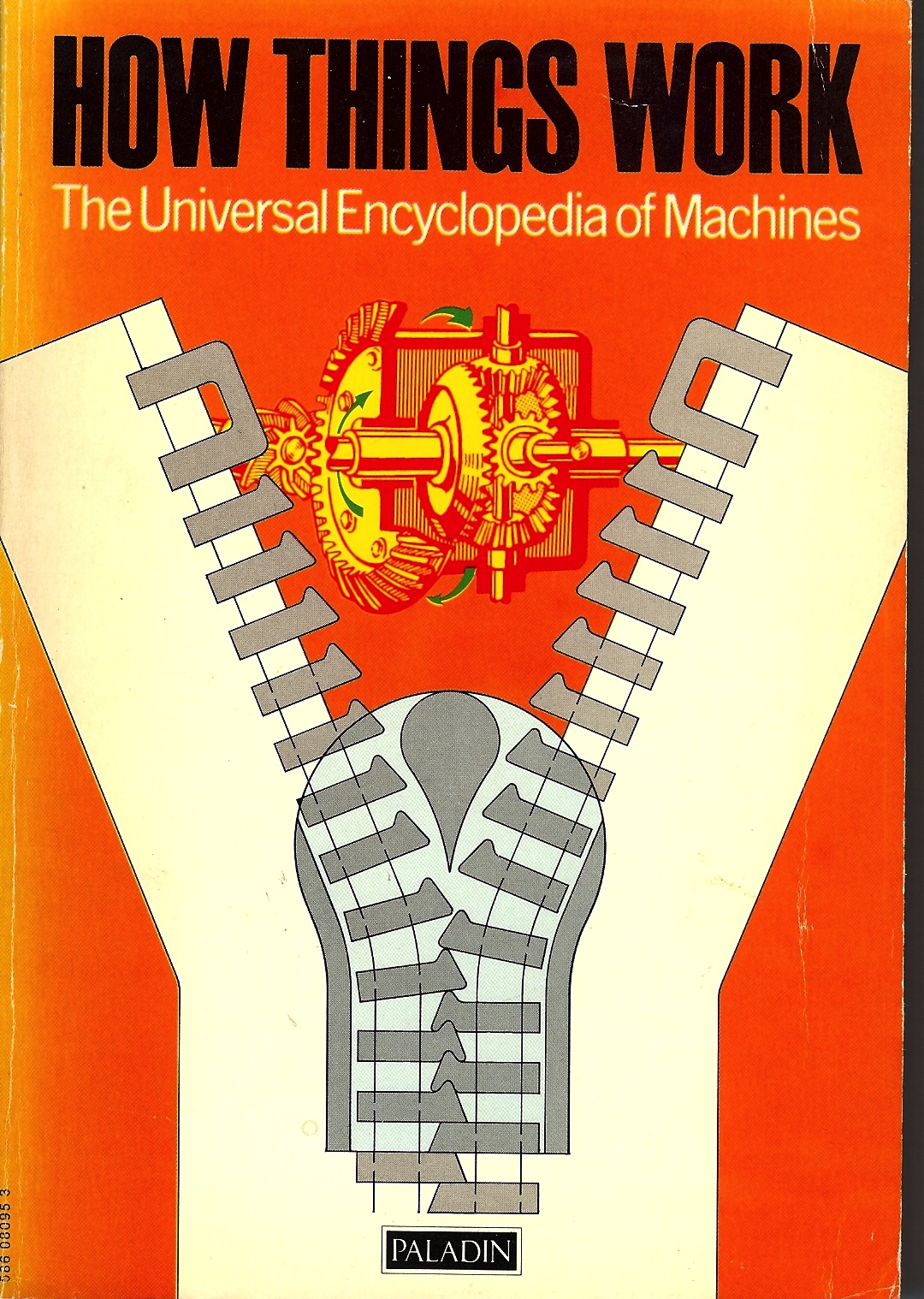
HowThingsWork Worse still, consultants often disappear without finishing the job, leaving someone else to clear up their mess and patch up the damage afterwards. Until the next round of management consultants come in.

As consultants, when we are invited into a client’s place of business, we are placed in a highly privileged and trusted position, one that we must not abuse or take for granted. Yes, we are there to identify problems and help develop solutions, and in some cases we are given the responsibility of implementing them. But in our eagerness to deconstruct an organisation, we can overlook the need for some foresight and advance planning.

When analysing a client’s operations, and before making any recommendations for strategic change or process improvement, I often recall the words of my father, who was a mechanical engineer. At a young age, I had dismantled a clockwork motor (to see how it worked) – but then found it was impossible to reassemble all the cogs. He simply said:

“Before you take something apart, know how to put it back together again.”


Are Start-Ups a young persons’ game?

Last week’s Lean StartUp Melbourne meeting was devoted to the AngelCube accelerator program. Given some of the high-profile start-ups that have come through this process, it was hardly surprising that nearly 400 people turned up to hear various AngelCube alumni share their personal experience (as well as to enjoy some free beer and pizza, courtesy of the evening’s sponsors: inspire9, BlueChilli, Kussowski Brothers and PwC).

First up, there were lightning talks by 3 successful program graduates: the team behind fantasy sports app developer C8 Apps, Ash Davies from self-publishing platform Tablo, and Phil Bosua, the technical genius at LIFX who designed the WiFi-controlled LED bulb. All of them vouched for the benefits of the AngelCube program, and offered key learnings – such as “fail hard, fail fast, fail forward”, and the value of having a disciplined weekly cycle of iterative product builds. Access to quality mentors was also a key factor.

Then Indi from OutTrippin joined the guys for a Q&A panel session, facilitated by AngelCube co-founder Nathan Sampimon.

Some of the accelerator program insights on the night were quite revealing –

  • it’s all about product-market fit
  • a solo founder will usually struggle on their own
  • be prepared to either pitch or pivot at the weekly program reviews
  • the $20,000 seed funding (for 10% of your business) doesn’t go far…
  • a B2B concept is less likely to be accepted to the program (due to longer sales cycles)
  • the model is founded on lean methodologies, frequent iteration and getting to an MVP
  • people with at least one start-up project behind them tend to do better
  • the AngelCube angels are investing in the team as much as the idea

But are start-ups really only for young(er) people? This question has been posed by Dan Mumby, from Melbourne’s StartUp Foundation, which offers a different sort of program aimed at would-be entrepreneurs who may have all the trappings of middle age: family, job, mortgage…. which means they have different personal and financial risks to consider.

On the other hand, as at least one AngelCube participant said, if you are serious about founding a start-up, “your first job is to quit your job”.

Another, broader challenge facing the local start-up community is a lack of serious investor interest. According to one panel member, “In Australia, getting funding is a joke unless you are literally digging for gold”. This may change with the launch of VentureCrowd an early-stage equity funding platform. (But it looks like it will be a struggle – at the time of writing, none of the 20 or so deals publicly showing up on VentureCrowd’s website have attracted any funding.)

An alternative funding model, based on the sweat equity principle, is a venture bank, like New Enterprise Services that essentially matches ideas with expertise through a risk-sharing process.

I always recall the advice I was given by one serial entrepreneur when I asked him whether start-ups are for everyone (regardless of age). He replied: “Unless you can afford to invest at least $20,000 in your idea, and support yourself for at least 6 months while you develop it, then maybe it’s not for you.”

5 Challenges for Performance Management

I recently facilitated a round-table discussion on Performance Management, with senior executives from commercial, not-for-profit and public sector enterprises. Our topic was current practice in Performance Management, and was hosted together with my colleagues at Bravo Consulting Group.

At the outset, we posed a number of discussion points, including:

Are there direct correlations between Performance Management, Employee Engagement and Productivity?

How is Performance Management linked to Rewards, Recognition and Compensation?

Do your people understand the context for Performance Management?

We also discussed the true costs of Performance Management systems (time, resources, software, administration), as well as the different attitudes of management, team leaders, HR and employees toward current processes.

The good news is that all the organisations represented are running annual or semi-annual employee appraisals. There was also an increased focus on performance outcomes (i.e., it’s not just about effort expended on job-defined tasks, but more about what is being achieved and how). And our participants reported the importance of using appropriate tools to deliver effective employee communications around corporate strategy, organizational goals, change management and project roll-outs to ensure greater alignment with, and context for Performance Management.

However, we identified a number of key challenges and critical issues facing any organization that takes Performance Management seriously, or who wishes to increase the effectiveness of their current practices:

1. Negative Perceptions of Performance Management

Despite the widespread use and acceptance of Performance Management systems, there remains considerable negativity around the process, the context, and the even discussions themselves. There appears to be a sense of foreboding when it comes to the mid- or end-of-year appraisal, a fact that was borne out for me just a few weeks ago: I was in the furniture display area of a well-known department store, when I overheard the floor manager say to one of her sales colleagues: “Mike says he’ll do your one-on-one at 3pm today.” What might appear to be a fairly innocuous statement visibly filled the employee with dread, at the prospect of his annual review. Surely Performance Management discussions should not be fraught with such unnecessary anxiety or stress?

2. Performance Management Systems Are All Different, And Too Rigid

Our round-table participants all reported using different software (and paper-based) systems, which is understandable given the proliferation of HRMS tools that support Performance Management. But many of these systems resemble accounting or project management software, and lack more qualitative or cultural performance measures. Alternatively, systems tend to be rigid, process-driven applications that often take a checklist and compliance approach to conducting Performance Management. They can also suffer from a “one size fits all” solution, and don’t readily help organizations to develop meaningful performance measures or point-in-time indicators, mainly because they are backward-looking and use retrospective data. Shouldn’t Performance Management help employees move towards the job that they want (and towards their longer-term career objectives), rather than confining the discussion to current or out-dated tasks?

3. Formal Processes Are Disconnected From Informal Processes

By making it a “process” (and an infrequent one at that), Performance Management becomes artificial, and divorced from day-to-day reality. This can result in performance issues being stored up and only “discovered” during the formal appraisal – which will add to the anxiety and stress if long-term resentments about manager-employee behaviours and relationships are only brought to light during the Performance Management process. A common outcome from the formal Performance Management process is a corrective or punitive response, due to the absence of continuing efforts to manage and direct performance. Why should employees only hear feedback about their performance at the end of the year, when it might be too late to address the issue, leading to knock-on implications for remuneration, recognition and promotion. Shouldn’t Performance Management be part of the everyday dialogue between colleagues?

4. Many Managers Are Simply Ill-Equipped To Have The Performance Conversation

Without the appropriate skills to foster meaningful and open dialogue with their direct reports, managers end up having to manage the Performance Management conversation, rather than helping their people self-manage their own performance. This awkwardness is compounded if there is a lack of organizational context for Performance Management; worse, poor performance is ignored or circumvented because managers do not feel confident to start the dialogue, which is not fair to the individuals concerned if they are not given the opportunity to discuss what might be the root cause of a performance issue. If there is no dialogue around Performance Management, how can employees know what they are being held accountable for, or appreciate the consequences of not meeting performance goals and objectives?

5. Performance Management Systems Ignore The Middle Majority

Most Performance Management systems (certainly the ones I have been exposed to) end up using forced bell curve distribution analysis to classify employees according to high, middle, low and under achievement categories of performance. I recall one former colleague who used to cite Garrison Keillor when annual appraisal ratings had to be allocated according to the expected distribution curve: “Well, that’s the news from Lake Wobegon, where all the women are strong, all the men are good-looking, and all the children are above average.”

When we asked our participants “what keeps you awake at night?”, one CEO commented that he worries about the middle 60%-65% of his employees – the bulk who “do a good job” – because more of his attention and focus is on the high and low performers (the top and bottom 15%-20% respectively). This “bias” can distort management perspective, and lead to disaffection in the middle band, unless there are adequate ways to recognize and reward solid performance independent of annual compensation or promotion. (This issue is particularly acute in Australia when we consider the impacts of slower economic growth, comparatively high wages and sluggish productivity – yet, employers face a war for talent as new and highly valued skills become harder to resource.)

Conclusion

If Performance Management could become a continuous dialogue, backed by meaningful performance criteria and underpinned by a greater emphasis on employee self-awareness and self-directed Performance Management, then organisations could spend more time on strategy and execution, and less time on managing individual performance. Not only would this create greater cost efficiencies in the Performance Management process itself, it would likely lead to improved productivity outcomes because there would be more clarity and engagement around goals, outcomes and incentives.