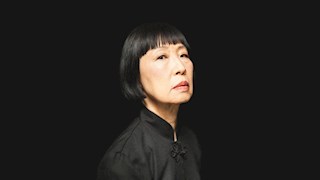
Life During Lock-down

As I write, Victoria is witnessing record numbers of new COVID-19 cases in the so-called second wave of the pandemic. Even as the State Government maintains the Stage 3 lock-down in Greater Melbourne (and most recently mandated the wearing of masks), some members of the public are trying to challenge these restrictions, while others have to keep being reminded to comply with the pandemic measures. Frankly, the way I have been feeling about the latest events, I don’t know whether to laugh, scream or cry.
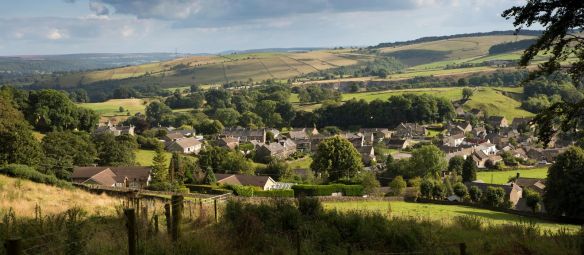
The Village of Eyam – Image sourced from National Geographic

Laugh, because I can’t believe how crass or stupid some of these refuseniks are. Scream, because I am so angry at the State Government’s failure to properly manage the hotel quarantine programme (which has led to the widespread community transmission), and the delayed decision to require masks in public. Cry, because the whole situation is incredibly sad, given all the people who have lost loved ones to the virus, and the many more who are experiencing financial hardship.

The Premier keeps saying that now is not the time to debate the whys and wherefores of who is responsible for the failure in hotel security arrangements, what caused the community transmission, or why so many people continued with their normal routines despite being symptomatic or while waiting for coronavirus test results. OK, fair enough – the Government’s main focus is on protecting public health (and shoring up the local economy), but hopefully there will be plenty of time for analysis and debate once the virus is under control (and hopefully well before the next State election, due in 2022…).

Meanwhile, I don’t know why politicians and health administrators are so surprised when members of the public fail to “exercise common sense”. Maybe the public kept hearing the Government was doing a such a great job (hey, remember Lock-down Pt. I?). Perhaps they over-compensated after a few weeks’ social distancing, became complacent and let down their guard. Or maybe they took their lead from public messages about “returning to normal” – and going to the footy and getting on the beers again….. Perhaps there is a sizeable portion of the community who can’t be trusted “to do the right thing” (or maybe they just don’t trust politicians, public servants, health experts or mainstream media).

As for why those people carried on as usual (despite being symptomatic or awaiting test results): there may be economic factors at play (to be discussed another day, but if that doesn’t include a debate on a Universal Basic Income, it will be a lost opportunity). It could be a lack of information and awareness. It could simply be human nature. But for a culture that celebrates “chucking a sickie” (indeed, one former Prime Minister even suggested it would be a point of national pride to do so following Australia’s success in the Americas Cup), something has gone wrong somewhere if people don’t feel any responsibility or obligation towards the health of their fellow citizens.

In my more existentialist moments (and I seem to have so much more time for that these days…), I can’t help thinking the pandemic is a three-fold challenge to the future of the human race: 1) the virus is nature’s way of inoculating itself against homo sapiens; 2) it will prove Darwin’s theory of evolution (survival of the fittest) by exploiting our weakness as social creatures – it’s figured out how to get us to spread the virus on its behalf; 3) the reduced levels of human activity and pollution will give the earth some time to heal (at least for a while).

At other times, I think about Talking Heads’ song “Life During Wartime”* – especially the line “I got some groceries, some peanut butter to last a couple of days”. With the need to limit shopping trips, the various shortages, and the focus on being prepared for a total lock-down, is it any wonder we may feel some anxiety? Of course, we could be in a far worse situation than what we are currently experiencing in Melbourne, both in terms of the number of cases and the breakdown in social order we see elsewhere. Yet that just underscores how inconsiderate and selfish those people are who can’t bring themselves to wear masks, or observe Stage 3 restrictions. Yes, the restrictions are inconvenient, and at times tedious, but they are hardly onerous compared to a full scale health crisis. And if anyone wants to discuss public sacrifice in the face of a virulent disease, I suggest they do some research on the village of Eyam in Derbyshire, England.

For myself, I know I have been very fortunate so far (probably thanks to some “compound privilege”). I have been able to work from home since March (although as an independent contractor, my monthly income has been reduced), but I have not seen any friends or family face-to-face either, and I won’t be traveling overseas next month for a family wedding, or to visit elderly parents. I am able to walk each day in the nearby park, but apart from food shops and the post office, I’ve not been inside any other retail premises. I haven’t been to pubs or restaurants, but I try to support the local hospitality sector by ordering prepare-at-home meals about once a week. I can’t get to see live music, but this has forced me to revisit my own music-making. And I don’t have to do any home-schooling, but I have friends and relatives who work in the health and education sectors.

My biggest concern, apart from the pandemic itself, is that we miss the opportunity to re-think the large areas of the economy that need restructuring. Politicians keep talking about “jobs, jobs, jobs”, as if the archaic labour structures inherent in the traditional master and servant relationship is the be-all and end-all of social economics. But where are these jobs coming from? COVID19 shows we can consume less, make do with less stuff, and so it can’t just be a demand-led stimulus. Nor should it just be a construction-led recovery (more “Big Build”), unless it is combined with innovation, sustainability, hi-tech, smart cities, etc. There is definitely a need to think about national self-sufficiency, and figure out what to do about supply chains, manufacturing and renewable energy.

Somehow, we have to turn this uncertainty and these challenges into positive outcomes.

Next week: The Limits of Technology

* The whole album, “Fear of Music” is the perfect soundtrack for the nervous paranoia and unease of the pandemic…..
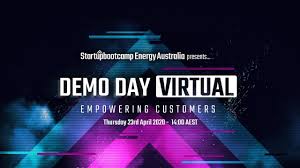
Startupbootcamp’s Virtual Demo Day

Not to be defeated by the Victorian government’s Stage 3 Covid19 restrictions, Startupbootcamp decided to stream the latest Energy Australia Demo Day online. It was a bold move given that a key value of these events is the opportunity to see and meet the startup founders in person. But to the organizers’ credit, and with support from their corporate sponsors and mentors, as well as the founders themselves, it was an impressive event, and managed to connect the teams with their audience effectively.

The nine projects in the order they presented (website links embedded in the names) were:

17TeraWatts

Focused on “meeting the demands of the new solar customer”, 17TeraWatts monitors residential solar energy systems via a combination of data automation and behavioral science. It achieves this via “Bodhi 2.0”, a digital assistant for modern energy companies, designed to be the “heart and brains of home energy systems”. Once installed, it is forecast to to generate a recurring revenue stream for the 25-year life of a solar system, by delivering reporting and customer leads. At the other end, solar consumers are willing to pay for more information about, awareness of and control over their energy systems ans consumption. Currently exploring a partnership with DiUS, Bodhi 2 is also being deployed by a Victorian electricity retailer.

Renbloc

Another team addressing energy efficiency management, Renbloc provide a solution to help consumers by bringing transparency to the verification of renewable energy sources. For a monthly fee, it brings real-time monitoring and optimization to consumer energy consumption. Renbloc are also working with companies such as Asahi and Energy Australia to provide verification “certification”, a form of energy labelling that can be applied to a wide range of consumer products.

Machine Dreams

The founders at Machine Dream are deploying machine learning and data analytics to monitor equipment failure, by detecting defective power assets owned and managed by energy distribution networks. Using system-generated photos to train the algorithm, Machine Dream claim significant reduction in the time and cost it traditionally takes to monitor network equipment, and with higher accuracy rates. The overall effect is to enable the frequency of assessment, and the reduce the cost of assessment. Currently in trials with Ausnet to monitor the “poles and wires”, Machine Dream can also be used for other infrastructure assets such as bridges, railway tracks and roads. The team plan to offer licensing and SaaS business models to asset managers and manufacturers.

GenGame

This is a customer engagement platform, delivering consumer apps for energy retailers to help their customers track retail energy bills (optimization, rewards, incentives, etc.) using customized profiles. The founders claim that customer relationships become stickier, via the low cost/low touch engagement. The team comprises a mix of creatives, energy industry experts and software developers to license client solutions which are priced on the set-up costs and the number of end users. Apparently, only 10 out of 40 energy retailers in Australia have a mobile app, and GenGame has two pilot projects with Energy Australia.

Energy Master

Another solution for energy efficiency, Energy Master is focused on helping corporate clients manage their utility bills. Essentially a business information platform, the application reviews consumption, taxes and fees, tariffs and off-sets, carbon reduction and water savings. It charges 0.5% of managed energy costs as a recurring fee, and does not require any hardware investment by clients. Currently running clients trials with Energy Australia.

ELDO MeterStack

This team is also addressing energy data analysis, but at the level of the grid, particularly at the fringe end of the distribution network. Their thesis is that consumers are not engaged, and don’t know how to understand their utility data or how to value it; meanwhile, energy companies cannot access consumer data. Positioned as a data market place between consumers and energy service providers, it offers a turnkey solution for the new breed of “digital utility” companies, and is working with DiUS and MHC to support distributors and the fringe of the grid.

Energos

Describing its solution as “intelligent nodes for distributed energy systems”, Energos is using AI for energy monitoring, management and optimization. Focused on business and industrial clients, the system can operate across multiple sites and in multiple countries, ideal for multinational corporations. Adopting a monthly subscription fee model, Energos is working with Energy Australia on a pilot solution for a business client.

BEAD

Using a combination of sensors and software, the team at BEAD are delivering intelligence solutions to help building owners, managers and occupants to manage “over heating, over cooling, over lighting”. With tag lines such as “listening to your building”, and “intelligent buildings you deserve”, BEAD is aimed at telcos, smart cities and BMS & HVAC vendors. Their system analyses occupancy flow, and develops digital models of buildings to track body heat (an important consideration in the Covid19 era, as well as events such as building fires, floods and earthquakes). They also work with building insurers to deliver real-time monitoring via Blockchain and smart contracts. Claiming to deliver 30% savings in energy optimization and efficiency, BEAD is working with Energy Australia, Hydro Tasmania and Asahi.

Liquidstar

This startup deploys Blockchain enabled apps to monitor their partners’ IoT connected hardware (batteries and container charging stations). Liquidstar is an IoT solution designed to build a “wire-less grid”, with the aim of removing diesel and methane power from communities that do not have access to grid networks. One potential use case could be in battery management for Covid19 quarantine centres.

Next week: Can we come out now?

Social Distancing in Victorian Melbourne…

At the time of writing Victorians, like most of Australia, are living under a Covid19 “stay at home and practise social distancing” regime in attempt to “flatten the curve” and reduce the spread of this contagion. I have been working from home for 3 weeks, only going out for essential food shopping and a daily walk for exercise (since my gym is closed). This perambulation has revealed some lesser-seen aspects of Melbourne (apart from the empty streets), including the way the modern city’s 19th century founders went about their approach to urban design – including some examples of built-in social distancing.

The first example is the number of public parks and gardens close to the CBD that were established in the 1800s, and which have managed to survive the onslaught of developers. As we know, public parks, with their trees and green spaces act as the lungs of the city, and provide a place to exercise, relax and get some fresh air. So we need these facilities more than ever in times like these. (Strange why the Victorian Government still insists in allowing vehicles to use the culturally and historically significant Yarra Park as a public car park on so many days, with all the horticultural and environmental damage that this causes…)

Second, the decision to incorporate lane-ways into the grid design of the CBD, as well as throughout the 19th century expansion of the inner city suburbs. While their design was mainly pragmatic (ease of access for night carts, storm drainage), the result is that in densely-built areas such as Richmond, Carlton, East Melbourne, Fitzroy and Collingwood, lane-ways mean even terraced houses can have ample space between them and the next block, allowing for better ventilation, natural light and reduced risk of disease. (For an example of the lane-ways importance to Melbourne’s character and psyche, check out Daniel Crooks’ video, “An Embroidery of Voids”.)

Third, the decision not to build right up to the urban banks of the Yarra River (and the straightening and leveling of the river itself) has left them accessible to the public, both as a means of cycling and walking to/from work, and for recreational purposes. In many cities, riverfront access has largely been blocked off as adjacent land has been appropriated for private, commercial and industrial use.

At a time like this, I truly appreciate the foresight of Melbourne’s Victorian town planners – I just hope we can continue to enjoy their legacy in the coming weeks and months!

Next week: #Rona19 – beyond the memes


Margaret Tan and Dragon Ladies Don’t Weep

Last week, I mentioned the number of ageing rock stars having to cancel concerts. In contrast, Margaret Leng Tan, aged 74, performed a 75-minute one-person show as part of the Asia TOPA festival in Melbourne. She made it look effortless, producing an almost choreographic style of piano playing, as she performed the world premiere of “Dragon Ladies Don’t Weep”.

Both autobiographical and a tribute to two of her greatest influences, John Cage and her mother, the show is a mix of live piano, prerecorded audio, digital art, multimedia and spoken word. It is comprised of anecdotes from her life, personal musings on loss, and practical aphorisms, such as “DRC” – the “daily reality check” – a must for all artists and anyone else needing to make sense of the modern world.

Clearly a very focused and determined musician, Margaret Tan has carved out a niche for herself in the modern classical world, with her championing of the toy piano. She has made it an instrument for serious composition and concert performance.

The physicality of her performance ensured that the digital technology neither dominated nor descended into gimmickry (no “tech for tech’s sake” here). Her presence on stage was captivating yet self-contained – despite largely being all about her, it was authentic and self-effacing in equal measure.

Margaret Tan revealed two key aspects of herself that go some way to explaining her success. First, at an early age she realised she had to concentrate on the piano – she couldn’t maintain her other music and dance studies – from which we get the sense of her single-minded purpose. Second, her lifelong obsession with numbers – almost a form of synesthesia; and given the strong relationship between numbers and music, it felt that she has learned to live with, even appreciate, this “affliction” in the pursuit of her art.

If there was one thing missing, it was Margaret Tan’s own music. While she is best-known for her interpretations of John Cage and other modern composers, I was curious about her own work, and whether she has ever explored composition herself.

Next week: My Four Years in Crypto